Categories
Developers

L2Code HTML Review and Interview [iPad]

One of the exciting projects that I am currently involved in is AppoLearning. It is a site dedicated to providing parents and educators a survey of the best apps for the iPad that can help our students grow and learn in Elementary, Middle and High School.  My topic was web design for high school students. Check it out.

Well one of the apps I reviewed was L2Code HTML by SparkNET Interactive. I really liked the app so I reached out the company to learn a little more about them and the app. iPads and smartphones are becoming more and more powerful and soon we might not even need a computer.   Thanks to Marc Stevens for taking some time to talk to us.

Q. Tell us a little about your company

A. Founded in 1996, SparkNET is a high-tech app development and Internet firm located in Green Bay, Wisconsin. We develop, administer, and support dozens of websites as well as a variety iOS mobile and Android mobile applications.

Q. What apps have your produced? From the list you seem to have an interesting variety of topics, any reason for that?

A. We’ve currently produced almost 20 mobile apps and have more in the pipeline. Early on we explored a variety of app categories in an effort to determine which would suit our team’s skillset best. We discovered that educational apps, games, and utilities were all a great fit for us, so we’ve been doing the bulk of our development in those niches ever since.

Q. Any plans to do more educational type apps like learn HTML?

A. Definitely. L2Code HTML already has a sister app called L2Code CSS that takes users to the next level in web development. We plan to continue producing more apps in the L2Code family in addition to an assortment of educational apps for preschool and elementary school children.

Q. Most of your apps are for iOS, do you see more of them being ported to Android in the future?

A. Funny you should ask! We just started developing Android apps full-time and there are several in the pipeline already.

Q. What apps do you have coming out soon or on the drawing board?

A. We’re very excited about the debut of our Ogre Academy series. These apps will teach basic skills like math and reading to elementary school children. The first installment will be Ogre Academy Math, which is in the final stages of development now. We’ve also got two new games in progress that should be out very soon as well.

Q. Where do you see the mobile industry and app market going in the next couple of years.

A. It goes without saying that the mobile industry is going to continue growing by leaps and bounds. Smart phones were a luxury up until just recently, now they’re almost a necessity. As this market grows, there’s going to be a huge opportunity for the app market to grow right along with it.

Larry – Thanks again Marc. Look forward to seeing your new app, including the Android side of things.

Unknown app
Unknown app
Developer: Unknown
Price: Free
Categories
Developers

A few minutes with Rodeo Games [Interview]

After playing Warhammer Quest, I decided to reach out to Rodeo Games and learn a bit more about them.

Q. Tell us a little about your company

Rodeo Games was set up three years ago by myself and three friends, with one goal… to make the coolest turn based strategy games the iOS platform had ever seen. We all hailed from the AAA games industry from places such as Criterion, Lionhead and Sony, so this lofty goal seemed vaguely achievable. Anyway, here we are, three years later, still striving to reach the stars; and that initial driving statement.

Q. What games do you guys play? What is your favorite?

Wow, well we play all sorts. The other day we had “Civ Day” in the studio. Warhammer Quest was in review at Apple, and we all decided that taking the day off to play some multiplayer Civilization would be a relaxing break. Twelve hours and much border defending later, we realized relaxing wouldn’t be on the cards! Other than that, I’m playing Star Command and Frozen Synapse on my iPad right now, with Baldurs Gate somewhere on my list of “I really should play this at some point”.

Q. Can you provide a little background on the whole Warhammer fantasy?

Warhammer Fantasy Battle is traditionally a table top game where players build vast armies to battle one another. It’s full of Orcs, Goblins, Undead, Beastmen, Skaven (nasty ratmen things), and all sorts of outlandish races. From that setting there are many variants and games, from the Civ style “Mighty Empires” to the American football spin off “Blood Bowl”. As a youngster I was into the whole lot. My Chaos Army dominated the battlefield, Empire army fought bravely for the realm, and Dark Elf team scored touchdowns in the Blood Bowl arena. So, when it came to working with the Games Workshop IP, it was a bit of a no-brainer.

Q. What does the future hold for Rodeo Games?

Good question. We’re going to continue updating Warhammer Quest for the foreseeable future. Other than that….well now, that would spoil the surprise!

Q. Where do you see mobile gaming going in the next couple of years?

I can see it hitting the living room. Hard. Everything points to Apple unifying all their devices. It won’t be long before most causal users will be using their iPad / iPhone to play games through their TV’s. I mean, yes you can already do that, but few players do. In a couple of years time, it’ll be as natural as playing on your iPhone is right now. This’ll have a knock on effect on the game’s we’ll hopefully see.

They’ll start to resemble deeper experiences, more like a hobby. During the day, players will play the “meta” game and prepare for the evening’s activities. For instance, in a game like Warhammer Quest, you’ll visit settlements during the day buying armour and weapons, maybe completing some easier dungeons whilst making plans with your friends about which HUGE dungeon you will all be tackling that evening. Then, when you’re at home, in front of your TV and online with your friends, you’ll be taking on the dungeon you’ve been preparing all day for.

Larry-Thanks again Ben for your time and we look forward to seeing what Rodeo Games gives us in the future.

Categories
Developers Social

Contactive – Free Caller ID [Android App]

App Name: Contactive

Developer: Contactive

Cost: Free

Market: Google Play

Information:

Everyone loves information, especially when it comes to incoming calls. Recently the folks at Contactive reached out to me to let me know about their new Android app. Their app Contactive will use your social network information such as from Facebook and other sources to help identify any number that might be calling you. It looks like a neat app so I decided to do some q&a with Helen over at Contactive to help shed some more light on the app.

Q. Tell us a little about your company.

A. We are a small team of big brains made up of brilliant designers, marketing folk, and engineers who specialize in machine learning. Contactive is based out of SoHo, New York City and is a sister team to its next door neighbor Pixable, both subsidiaries of SingTel’s Digital L!fe Group.

Q. Why did you create this app?

A. We live in an age with technology that can literally split atoms, but we still have to Google the numbers of
unknown callers and ask our friends for updated contact information. It makes no sense for the information from
our telecommunications world to be so disconnected from the information that already exists on the Internet. We
decided to bridge this gap with Contactive.

Q. Why should someone use your app?

A. Contactive not only identifies unknown numbers, but it also creates an address book that is powered by your
social networks and always up-to-date. The app displays critical information during the few seconds when the call is ringing – latest tweets and status, job listed on LinkedIn, etc. It’s the kind of magic we dreamed about in the 90s.

Q. Do you have to log in on Facebook to use it?

A. No. There is an option to create an account using only an email address. However, we encourage users to
connect their Facebook accounts (and other supported networks) in order to automatically populate their address books with the latest contact information including status updates, job titles, birthdays and anniversaries.

contactive3

Q. How does the app identify unknown users?

A. Contactive identifies unknown numbers using two main methods. The first method simply automates the search process to find public information online (LinkedIn, Facebook, Yelp, White Pages, etc.). The other way Contactive identifies unknown callers is through its own Global Directory, which is compiled by sourcing and adding directories from all over the world.

Q. What limitations does the app have?

A. Contactive does not have the ability to identify numbers that are private. We also have a self-imposed privacy
limitation that prevents users from finding numbers through reverse lookup – users cannot search for people’s
phone numbers in the Global Directory.

Q. What future plans do you have for the app?

A. We have two big plans for Contactive in the future. The first is to enable our users to help identify unknown spammers/telemarketers for other users via crowdsourcing. Secondly, we’re working on turning Contactive into a mobile communication hub that is channel agnostic and deeply integrated with popular social networks and apps. Users will be able to connect with their contacts using any communication platform (Facebook, email, Skype, WhatsApp, SMS, Viber, etc.) right from Contactive.

Appreciate the time today Helen and giving us some more information on Contactive. Still unsure about the app, check out this demo video. Enjoy.

Categories
Developers

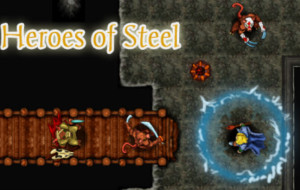
Heroes of Steel – Interview with the Trese Brothers

Today we have Part 2 of our interview with Andrew and Cory Trese, the men behind Space Traders. Recently they had a Kickstarter project going for their new game Heroes of Steel, which should be out later this year.

(AT = Andrew Trese and CT = Cory Trese)

Q. Tell us about your Kickstarter project

[AT] The KickStarter project was one of the most exciting months we have had in 3 years at Trese Brothers. The whole project was a major groundswell of support and positive energy from every part of our life and community — from friends, family, gamers, fanatics.

We specifically chose Heroes of Steel because it is a game that our community had requested and asked about en masse for a while. And its our first foray into fantasy RPGs for mobile, even though for me, Andrew, fantasy RPG feels like home in pen-and-paper.

As we build out the project, I am most excited about two things: the new engine, and the story. We hit one of our major stretch goals at $20,000 which prompted us to pick up a new game engine so that we could support iOS devices like the iPhone and iPad, as well as Android, OUYA, and now desktop as well. This has opened so many doors for us and is allowing us to raise the bar across the entire Trese Brothers gaming experience. It’s a game changer. Heroes of Steel is a new era for us, and will be available on so many more platforms than any game we have had before. What I am most excited about is telling an epic, painful story about people and weaving it through a challenging turn-based combat game. What could be more fun than that?

Q. Do you see more developers using Kickstarter in the future to get their games out?

[AT] For indie developers, KickStarter and services like it are changing the face of what we can achieve. It opens doors for indie developers and I would encourage game developers to use KickStarter, absolutely. Indie game developer struggles with funding — that’s why you’re indie — so they should use KickStarter and IndieGoGo to combat that.

It isn’t a magic bullet, and developers who don’t already have some credit and a following may not do well there. For me, that’s actually encouraging — if you are an indie developer who does it right, who listens to the community and builds your base, then KickStarter will work for you.

It’s also been interesting to watch big studios and big names put out KickStarter projects and raise a million dollars. KickStarter has definitely changed the face of funding for game developers.

Q. Other than your Kickstarter project any other future plans?

[AT] Absolutely. We are really excited about repeating the KickStarter experience. First, we feel we have to deliver, and deliver big, on our promise for Heroes of Steel. We are putting a ton of our limited time into new development right now and Heroes of Steel is moving every day.

For the next KickStarter, we are most likely going to come back to our roots and kickstart a game in the Star Traders Quadrant. With, Heroes of Steel scheduled for late summer, we hope to be back on KickStarter by fall. If we are lucky, all the new fans and followers we have gained through Heroes will join us on our second run!

Q. What are some of your favorite games?

[AT] Growing up, one of the first real games I ever got to play was Heroes Quest, which has some definitely influence on Heroes of Steel. Turn-based fantasy RPGs have always held a spot in my heart, from Shining Force, to the the Final Fantasy series (3 to 7, for me please), FF Tactics, Ogre Battle Chrono Trigger, I could never get enough. It’s one of the reasons that I can’t wait to finish Heroes of Steel!

Q. Where do you see mobile gaming industry going in the next few years?

[CT] I think we will see mobile platforms and console gaming platforms becoming more and more intertwined. I think things like the MOGA, SHIELD, OUYA and the like are the beginning of that convergence. Mobile platforms, and mobile games, will be running on increasingly diverse hardware. It it hard to predict what the hardware diversity will look like, but there are emerging trends around visualization — Oculus Rift and Google Glass that could potentially have massive impacts on the gaming industry.

One of the surprise enablers in mobile gaming is going to be crowd funding — look at GCW-ZERO and the other projects I mentioned. People with big ideas — ideas that might shake up the whole industry have access to new funding and distribution channels. Much in the same way that Google, Apple and Amazon made distribution of applications easy for an independent team platforms like KickStarter and IndieGoGo are making it possible for independent teams to take on much bigger projects.

======

Larry- Well I definitely want to thank Andrew and Cory for taking some time and giving us some great insight into their games: current and future. When Heroes of Steel comes out, we will definitely be reviewing that one. If you want to keep up with the Trese Brothers, here are some important links:

Trese Brothers Games (website)

Trese Brothers Blog

Trese Brothers on Facebook

Categories
Developers

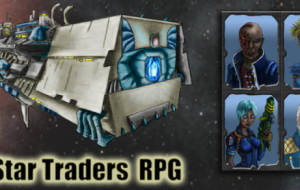
Space Traders RPG – Interview with the Trese Brothers

Today I am excited to announce we begin a two part interview with Andrew and Cory Trese the men behind Space Traders RPG. Space Traders RPG has been out on Android for quite some time and recently was ported to iOS. If you enjoy turn-based strategy role playing games, then this is one to download.  We recently reviewed the game. This was one of the first games my son downloaded on his phone.

We cover a lot so lets dig into it.

(AT = Andrew Trese and CT = Cory Trese)

Q. Tell us a little about your company

[AT] Trese Brothers is an indie game shop formed by two brothers — Cory and Andrew — who have always made games together. We’ve always created pen-and-paper RPGs and war games together, and those skills, passions, worlds and systems have all successfully translated into the mobile gaming world. Our firs three game titles are all based on worlds, settings, and systems we created as pen-and-paper games.

Trese Brothers is very small — just two brothers working on our overtime to make games. Two things that stick out to me are that we need to be very well organized and that we have to share tasks. For three games and another one in development, we have to run a really tight ship to keep up. So, we apply a classic software design methodology — namely agile development — to structure our weekly task lists and t make sure we are achieving the levels of progress we want. And then, we share tasks endlessly. Both Cory and I are software engineers, I do all of the art, and we share the marketing, administration, and other tasks of the business as needed. That part comes from agile as well, anyone on the team can “pick up” a task that needs to get done.

We are a very small company, but that is how we keep our pace!

Q. How did you come up with the idea of Star Traders?

[CT] The original idea for the Star Traders setting comes from a pen and paper RPG Andrew and I created. The original inspiration for the Star Trader’s difficulty and standbox style came from classic SNES RPG and mid-1990s Mac games like “Escape Velocity.” The ideas that would form the core of the game play came out of long discussions about at turn at a time games could mesh well with touch screens and mobile game play.

Star Traders was designed and developed during a time of great experimentation for Andrew and I — we had nothing to lose building a mobile game so we built something we enjoyed playing — because it was nostalgic, because it was hard, because you could play for 30 seconds or 3 hours at a time.

Q. What is the key difference between the different versions?

[CT] The Elite version is designed as a game changer for players who want a bigger challenge and more content. The biggest, and most immediately obvious change is the size of the map. Elite increases the size of the map from 676 sectors to 2,700 and doubles the size of the galactic economy meaning bigger payments, more resources and bigger shipyards. The map, hundreds of additional ships and planets and access to Elite only unlockable content (upgrades, officers, awards) make the one time price of Elite pretty tempting for people who love retro RPGs.

Q. I see that you have ported your games to iOS, are there any major difference between the Android and iOS versions?

[CT] Both the iOS and Android versions are developing along the same road map, however the Android version had a bit of a head start. Right now there are no major features that differentiate the two versions but the iOS edition has some catching up to do still in minor features and polish. Future releases of the games may include market specific features if that is what players ultimately request.

The iOS version does have some potential future features that would set it apart from the Android edition. For Andrew and I the port represented a chance to improve some of the basic elements of the Star Traders RPG game engine, including the difficulty system. The iOS version will eventually have a custom difficulty builder like Cyber Knights that allows the player the customize each individual difficulty setting.

Q. Did you have a hard time porting your game to iOS? Why don’t more developers do this?

[AT] Unless you started with a multi-platform game engine — and I recommend you do! — its a ton of work. It’s a completely new language, its an all new interface layer, the graphic requirements are different. It’s a lot of work! What you do see is a lot of big companies porting across the platforms, but more from iOS to Android as a second thought than the other way around. Android is ideal for an indie developer because the bar is so low to get on the platform and to get you game in front of people — its perfect. It also helps that there are a lot of indie or retro games on Android, so you can fit right in with a game that has lower-end graphics. I am not sure iOS has that same welcoming feel to aspiring indies.

=======

Larry: Ok that is the end of part one. Stay tuned, tomorrow we get into their new game and what the future holds for the Trese Brothers.

Markets: Google Play, iTunes

Categories
Developers

Getting to Know Sparkling Society

Talk have the pleasure of speaking Mark from Sparkling Society. They are the developers of the highly successful game City Island and City Island: Airport. Make sure to check out our reviews of the games.

Q. Tell us a little about your company

A. Sparkling Society develops games with the ambition to engage players into fans, i.e. “members of the sparkling society”. With a strong and rapidly growing community of tens of thousands Facebook followers and email newsletter members, we are chasing our ambition. Based in The Netherlands, the games are developed together with developers and designers from all over the world to bring the best experience in many different languages.

Our first game City Island, has been played by over 3 million players this year. At the beginning of May, we have released our new game City Island: Airport which we like even more and expect to even outperform City Island. This year, we expect to release a sequel of City Island and perhaps one or two brand new games as well. We have great ideas for new games and beautiful designs, and we are working real hard to have them released as soon as we can!

Q. Why did you make City Island?

A. Ever since we started playing Sim City approximately 15 years ago, we were loving the concept of city building games. When we noticed there was no similar and fun game to our liking in the Google Play store, we decided to develop one ourselves. That is were the passion meets the business!

Q. What future updates do you have planned?

A. Currently we don’t have social integration in our games. What would be more fun when you have created a beautiful island, as to share it with your friends. Or when you face certain challenges in your game, wouldn’t it be great if your friends could help you. Those kind of social things we will be adding in the upcoming months. Furthermore, our designers are constantly working on new designs, new levels, a larger map with perhaps multiple islands and more. We will bring the Sparkling Society all ideas and features at the maximum pace that we can achieve.

Q. Any plans to port the games to iOS?

A. Yes. However, since we are a small team, we will not develop it ourselves. We are looking for partners to help bring our games to iOS as soon as possible.

Q. What you do you think of the freemium model for apps?

A. It is a great model. We think it is a win-win for our society. People don’t need to pay any money to enjoy our games. It is absolutely possible to reach the final level without ever paying a cent. We even provide free weekly giftcodes to get free gold on our Facebook page for City Island or diamonds on our Facebook page for City Island: Airport. Luckily, there are enough players that support us by purchasing gold and diamonds in the games for us to make a living out of it. Therefore we are able to keep the new games and updates coming. So, a win-win situation for all of us!

Q. As an app developer, what is the hardest part in making a game?

A. Since we are a small developer, it is difficult to test the games on all major devices. Furthermore, there are not only hundreds of android devices available, but there are many android versions as well. Due to the many combinations, it is impossible to develop games that work smoothly on all devices and android versions.

Q. Where do you see mobile gaming going in the next few years?

A. We expect the mobile gaming to be growing a this pace for a certain number of years. We expect the freemium business model find its way to console games as well and we expect the two worlds to come together in a few years, i.e. playing android games on your television and playing console games on your mobiles. Lots of fun for developers like us to jump into the possibilities!

=============

Larry: Thanks again Mark for taking some time to speak with us. Looking forward to see what Sparkling Society has for us in the future.

Categories
Developers Press Releases

Tripshare launches iPad App for Travelers

Tripshare is the first travel planning app to let users create bookable itineraries with actual dates, prices and availability for flights, hotels, vacation rentals and tours.  “Tripshare trips are more than wish lists.  They are real, and they are actionable,” said CEO and Co-founder Bob Dana.

Mr. Dana brings a track record of helping start new ventures that change travel paradigms.  He was employee #1 at Virgin America, where he wrote the business plan green-lighted by Sir Richard Branson and served as its first CFO.

Online travel offers many services for inspiration and for booking, but between them is a gap – the need to collect, organize, and share specific information before committing.  For complex trips or to collaborate with others, travel planners create draft itineraries.  Tripshare’s research shows that 55% of U.S. adults have made itineraries, overwhelmingly for leisure travel.  Yet modern tools are lacking; over half of these itineraries are still created with pencil and paper.

Tripshare is ideal for complex trips or for people who plan travel meticulously.  With Tripshare, users take control of trip planning by tapping into huge inventories of partner content via a simple, map-based interface supported by high-resolution photos and a drag-n-drop editor. It’s a professional tool that’s easy enough for anyone to use.

=====================

I thought this looked like a neat app, so I reached out to Bob Dana to get some more information.

Q. Tell us about your company.

A. Tripshare was formed in 2011 by me (Bob Dana, CEO/Co-founder) and Ken Goto (CTO/Co-founder). Ken has
since moved on and been replaced by Eric Kapke (VP Engineering and Acting CTO). Ken and Eric both come
from Apple and Microsoft, so we have a very strong technical team. Our designer was also ex-Apple. Today we
are seven in total, four full-time and three part-time.

Our company has a singular mission: to build the world’s best tools to create and share draft travel itineraries.
Our initial product, of course, is an iPad app targeted at consumers who want to plan leisure travel. We believe
about 10-25% of all leisure travel involves the need for a draft itinerary, typically (i) to manage complexity, or (ii) to
build a consensus among groups traveling together. We call this “C2C trip sharing”.

We also believe there is a large demand for our tools for “B2C trip sharing”, where small/medium sized businesses create and share itineraries with their prospective customers. This market includes travel agents, of course, but also a “long tail” of tour operators, B&B owners, vacation rental owners, and other travel suppliers that typically live in a world of responding to customer inquiries with quotes for their services. We believe (and our research bears this out) that B2C trip sharing will be a strong driver of adoption of our product.

Q. When did the Tripshare app first come out?

A. We released Tripshare v1.0 in the App Store with no publicity or advertising in August 2012, after a year of
development. It, and subsequent updates, were featured as “new & noteworthy” by the editorial staff at Apple,
resulting in about 20,000 downloads. However, feedback was clear that we needed to make the app simpler,
more intuitive, and more engaging. So we worked for seven months on v2.0, introduced two weeks ago. Early
response to v2.0 has been strong, both from consumers (4.7 average rating) and from travel industry experts.

Q. Who would you recommend use Tripshare?

A. Tripshare is for people who need to plan complex, multi-destination trips and to sort out their plans before they book. it’s also for people who travel in groups, for example friends traveling together to attend a destination
wedding or a sports event. It’s also for people who just love to plan, who are obsessed with “vacation perfection”, who are often consulted about a specific destination they know well and want a fast, fun way to share their knowledge, and people who see travel (and itineraries) as a form of self-expression. And, of course, the business users I mentioned above.

Q. What future plans do you have for Tripshare or any other app?

A. For the next few months we are focused on platform extension: bringing Tripshare to the iPhone and the web
browser (today browser-users can see an itinerary and comment on it, but they can’t yet search and create a
trip). We also expect to plug key gaps in our content such as rental cars, multi-day cruises/safari’s, and perhaps
rail transportation.

In 2014 we expect to turn out attention to building a community, especially the ability for users to search for relevant itineraries of other Tripshare travelers for ideas and affirmation. Longer term, we will add new features such as driving directions, semantic search capability, integration with personal online calendars and trip support services (e.g. Tripit), post-trip commemoration capability, and many other features.

Many thanks to Bob Dana for his time and if you doing any traveling head over to the App Store to pick up Tripshare.